
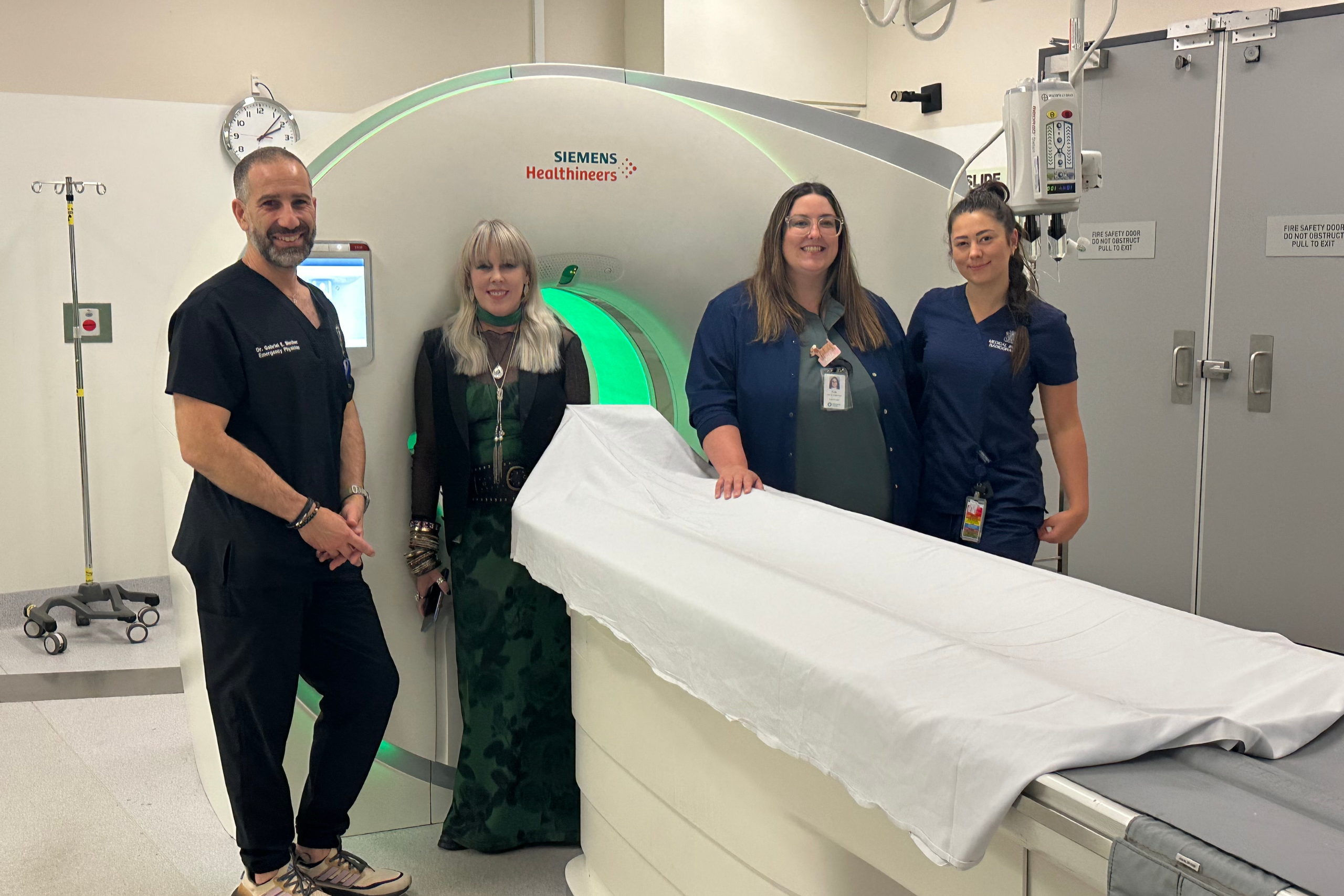
A new initiative in the Emergency Department at Peninsula University Hospital has already saved 555,000 g/CO2 of carbon emissions since its inception.
“We all know climate change is a significant and ongoing consideration by governments, and we have to recognise that some aspects of healthcare operations can have considerable emissions intensity,” says radiographer and project lead, Kate Hyde.
The Sustainable and Quality Use of Diagnostics in the ED initiative focuses on reducing low‑value diagnostic tests that add cost, create avoidable emissions, and don’t meaningfully change clinical management.
The project goal is to reduce the number of requests for CT KUB and CT Pan Scans in the Emergency department by 30%, thereby reducing unnecessary carbon emissions and also saving costs.
“If a test can be safely avoided, it’s a great outcome for everyone and our environment. Decreased testing can reduce radiation exposure, shorten ED length of stay, and free up resources for higher‑value care,” explains Kate.
Using Safer Care Victoria’s data platform, the team has already measured impressive impacts. Not only has there been 555,000 g/CO₂ saved, as well as $168,000 in cost savings, the project has also sparked two new follow‑on projects targeting reductions in CT Brain and CT PA (Pulmonary Angiogram) requests.
It has also sparked enthusiasm among clinical staff, many of whom are now initiating their own ideas for sustainable improvement.
“At the end of the day, these reductions have been a win for patient care, a win for the environment and a great result for ensuring that our resources can be allocated to high-value initiatives,” says Kate.
Pictured (left to right): Gabriel Blecher (Clinical Director, ED), Phyl Martin (Choosing Wisely), Kate Hyde (Project Lead and Radiographer), Anna Duncan (CT Educator)